we meet the cyber security expert in this interview Maxime, let's deep into his GNN skill by book.
I think this book and interview have the gold standard and tips for graph representation learning. because he is the cybersecurity of phd and actually utilize gnn in his task of industry(JPmorgan).

First Interivew , Maxime Labonne
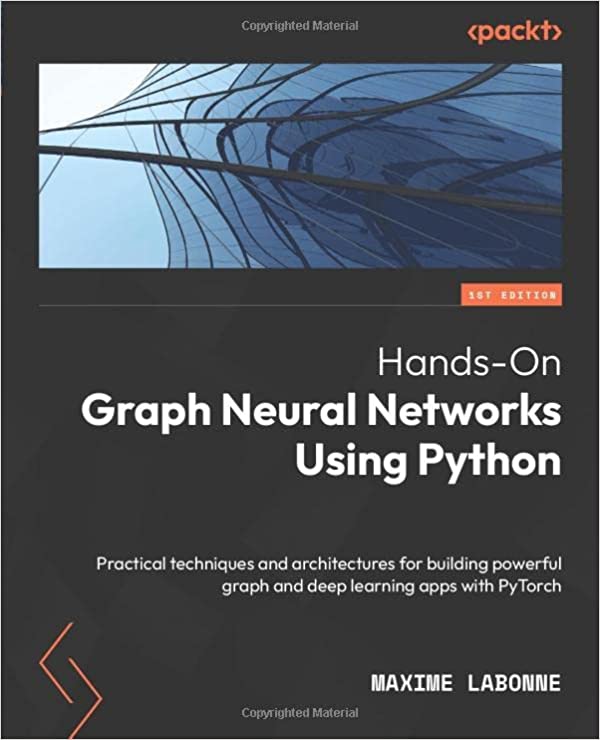
there are 18 parts of graph neural network from foundation to practical view.
I think this book is well suited for following people.
- I am the expert level of Graph representation learning but, needs to view of others with GNN.
- Starter for personal GNN side project or proto-typing in company.
- I want to study graph neural networks with minimal mathematical knowledge.
- I want to know practical view of GNN and how implement them.
- It was the most efficient when studying with hands-on sessions.
Let me told the 4 most impressive factors in this book among many good things.
First, kindly instruction for reader.
I sure you have feeling the comfortably by reading the book such as connected by writer and reader each other. It means the explaination is quite simple , clarify and kindly.
Second, Variant useful recipe for GNN.
Advanced technique
- GIN, GCN, Ensemble
- we had been always consider the model selection which model is good in graph expressive feature is important case. so in this book, trying to solve them by experiment and having other trial the interesting way to ensemble output of each model is good or bad.
- Link prediction overview → From traditional view To baseline(SEAL)
- network science view and graph representation learning. we can know how i make good model by using the network science technique.
- Scaling technique with GraphSAGE
- optimization concept using combination both optimization funciton and results of neighbor sampling of gradient
Third, Solving basic curiosity for whether is good option siutation using MLP or GNN.
back to the child days in graph representation learning, i had been always consider myself why i use the Graph rerpesentation learning? it was enough to use the tabular manner.
Fourth, we can get his tip of professional field ‘cyber security’
The heterogeneous anomaly scenario is written in this book of Application part. as you know the author’s strong technique is cyber security solution.
For example, the imbalanced feature in dataset situtation is very frequent case in real-world. however, we didnt’ know that how we deal with that. then, we refer this book. plus, we improve our model by not only homogeneous graph manner also heterogeneous manners. it was dealt with here too.
interview
Author
Could you introduce yourself?
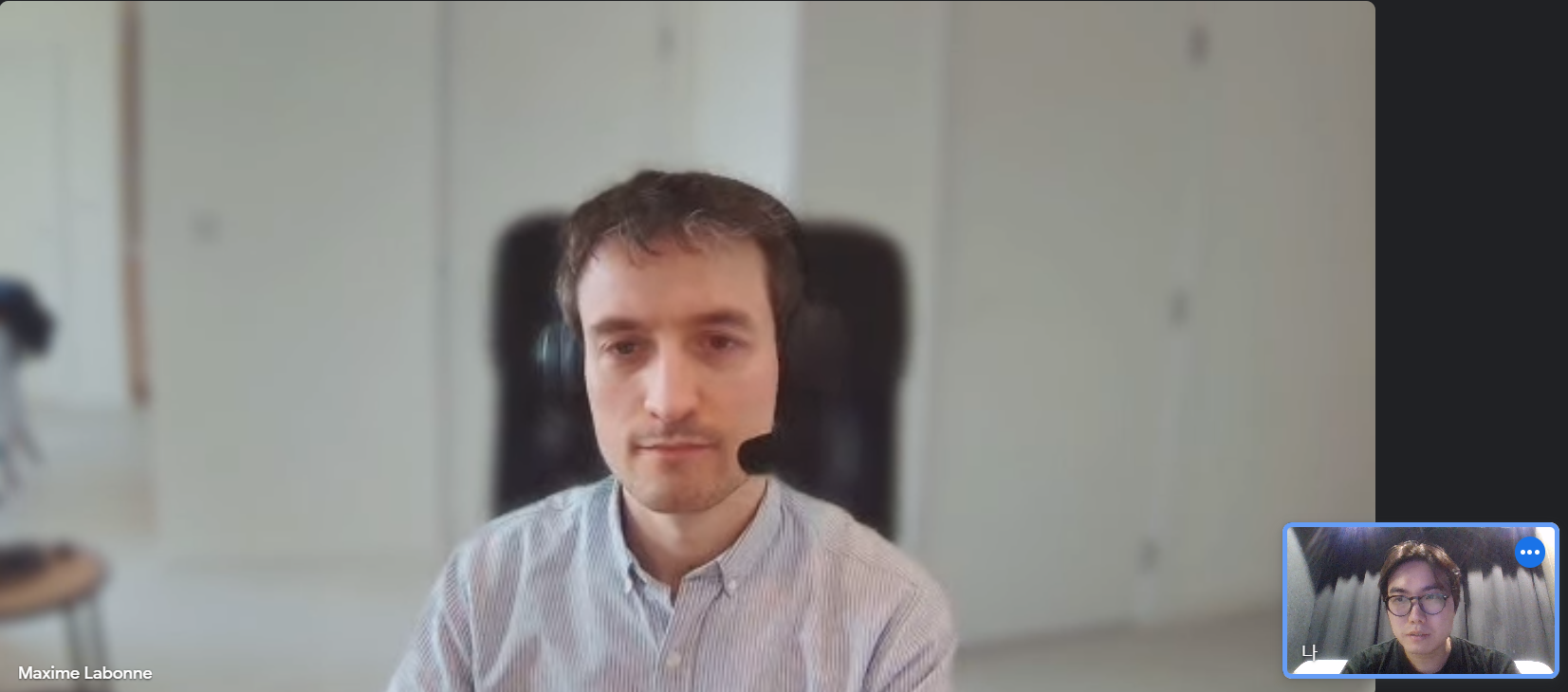
Maxime Labonne is a senior applied researcher at J.P. Morgan with a Ph.D. in machine learning and cyber security from the Polytechnic Institute of Paris. During his Ph.D., Maxime worked on developing machine learning algorithms for anomaly detection in computer networks.
Contents question
what is the motivation for writing this book?
[edu] For stduy myself of upgrade graph technique. no efficeny way to improve my skill is having perceptive of explain things to others.
recommend method to efficient read this book
[keep in mind for Why GNN?]
expandable! There are many baseline code for expanding your case. you just search them by index and apply!
The part that you worked the most on in this book
Difficult [Scalable and GNN architecture] because it needs to many engineering technique.
Easy [no theory ] honestly , i was very happy to write this book since minimize theory intervene in here.
Real-world application
Is it useful tools the graph in your job? if yes, just summarize the case
[traffic was already network computation advantage] traffic , road and road is orginally network format. so it was very useful things.
I think the Graph technology are consists of database, graph algorithm(random walk) and graph representation learning(GNN). so if you think same as me, told me priorities among them.
priority 1.Graph representation learning
→ automated pattern capture is most important part. because there are many obstacle in real-world problem. but graph representation learning solved them by data-centric approach.
priority 2.database
→ CI/CD management , we always faced the optimization problem how we avoid the OOM pharse! so it was
priority 3.Graph algorithm
→ strong baseline, but it didnt well on real-world case since the large or real-time processing wasnt solved them.
as you experienced , sometimes the algorithm didn’t well on real-world task(FDS). so how you solve that siutation?
If the model doesn’t enough to have the performance for task solution , i am using ensemble technique. for example ) not only using GNN also combination or ensemble model(baseline).